Here's an update on the forecast for the next week in Calgary, Alberta. Today's high of -18 degrees Celsius; Tomorrow high of -20 Celsius. Sunday high of -24. Monday high of -25. Tuesday high of -26. You can see how this is going. And they say there's global warming.
Well right now I have to call bullshit.
It's too late.
Called it.
Also, under the column of "useless facts about Dr.Clawmonkey's blog", is my previous post about Rona Ambrose was post number 69 for my blog. Oh YEAH!
Peace
Friday, November 24, 2006


Monday, October 30, 2006
Goofball Of The Month: Rona Ambrose
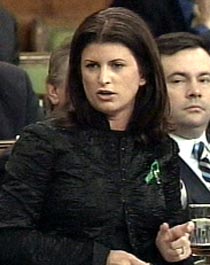
This month's goofball is Rona Ambrose, the Minister of the Environment for Canada. Although she is pretty cute.
She earns this achievement because of the latest Clean Air Act from the federal tories and from her weak presence as the Minister of the Environment. This so called "clean air act" was suppose to be her baby. Yet the PM,Stephen Harper, was the one who actually unveiled it. All Rona did was stand in the back and keep her mouth shut. She's a good soldier Stevie would tell you. Stevie runs a tight ship. Stevie doesn't like to share. You got to do it Stevie's way. My personal favourite; Stevie's gettin' upset!..... where was I ....
Anyways, this clean air act seems a little too slow. There's no short term targets. We'll really start to see change by 2050. That's a long time to wait. If cleaner air will help reduce global warming. And Canada is a major contributor. Then shouldn't the targets be sooner. So we could start to see noticeable changes by 2020, or even 2030. I could live with that. But 2050, seems to me the tories are starting to read from the liberal red book.
I read an interesting article in the financial post by Ross McKitrick about this Clean Air Act. I'm gonna paste and copy it. So if you are so interested continue reading. But before I go.
Congratulations Rona Ambrose you're the Goofball of the Month for October 2006
Targets in the air: The Clean Air Act
It is unclear why the federal Conservative government is introducing new air pollution regulations at all
Ross McKitrick, Financial PostPublished: Friday, October 27, 2006
At last, Canada has a Clean Air Act. Or, at least, another Clean Air Act: a law with the same name was enacted back in 1971. But at last we have a government willing to introduce clean air standards.
Except, that is, for all the provincial governments that have had air pollution standards on the books for decades. Ontario Regulation 419/05, for instance, lists 344 substance-specific standards based on the so-called point of impingement criterion. This means that if you emit a substance to the air, once it leaves your property and impinges on your neighbour the concentration has to be sufficiently low as not to be damaging.
OK, but at last we have a government willing to put fixed emission caps on large final emitters. Well, except for the fixed emission caps already imposed by provincial governments. In Ontario, for example, Regulation 194/05 lists the large final emitters of sulphur dioxide (SO2) and nitrogen oxides (NOx) and their specific emission limits. The Imperial Oil refinery at Sarnia, to pick one, must reduce its SO2 emissions from 23,938 tonnes this year to 9,200 tonnes by 2009.
But at least a federal government inspection staff will investigate emission infractions. Although, what with all the provincial inspectors, compliance officers and environmental consultants currently doing the same job, they may need to drive around the block a few times waiting for a parking spot at the factory. Just last summer, for example, the Ontario Ministry of the Environment did an inspection sweep of the Sarnia petrochemical sector. So it is unclear why the federal Conservative government plans to fund a new investigative branch to do the same thing.
In fact it is unclear why the federal Conservative government is introducing new air pollution regulations at all. Their notice of intent (NOI) to regulate certainly doesn't clear things up. Their explanation is that "Canada has historically relied on a variety of non-compulsory measures to reduce air emissions. However, these have not proved sufficient to reduce the health and environmental risks across the country." The idea that Canada's current pollution laws are non-compulsory would probably come as a surprise to the many firms and individuals who have been prosecuted under them. And air quality has improved substantially since the 1970s, as shown in the government's own data.
z Monthly average SO2 levels were never very high out west, and in the east they have fallen dramatically since the 1970s. Prior to 1970, they averaged over 100 parts per billion (ppb) in Toronto. By the late 1970s, SO2 levels in eastern cities averaged 20 or 30 ppb and today they typically average five to 10 ppb.
z Monthly average total suspended particulate (TSP) levels in Canadian cities were, on average, well over 120 micrograms per cubic metre (mg/m3) in the 1970s. Since then they have fallen in many places to near or below 60 mg/m3. Vancouver has typical levels of 10-30 mg/m3; Toronto and Montreal are slightly higher, usually coming in at 30-60. Halifax has always (back to 1974) had TSP readings below 50, and currently they are below 30.
z In all Canadian cities, monthly average carbon monoxide (CO) levels have been steady in recent decades at about one part per million (ppm). The eight-hour Environment Canada desirable standard is eight ppm.
z The Environment Canada annual average desirable standard for NOx is 32 ppb. Most Canadian cities exceeded this standard for some months of the year up to the late 1980s, but since the mid-1990s they have had average levels between 20 and 30 ppb per month. Edmonton has a slight tendency to exceed the 32 ppb level, but otherwise Canadian cities are below 30 ppb.
z Canadian cities exhibit seasonal ozone patterns with monthly averages varying between 10 and 40 parts per billion. The Canada-wide desirable annual average standard is 65 ppb. There was little or no trend in ozone levels from 1970-1990, but there is an upward trend after 1990 in some cities. Ozone mainly becomes a concern during short episodes of intense summer sun and atmospheric inversions. Since the process of ozone formation is highly complex, it is not entirely clear what types of emission controls would reduce these temporary spikes, but to the extent NOx and volatile organic compounds are at fault, they are already subject to regulation.
As for the health and environmental risks, the NOI makes far stronger claims than the underlying science assessments warrant. The 1999 Health Canada science assessment of then-proposed national ambient air quality objectives for particulate matter noted that while epidemiological studies have generated a range of small and uncertain correlations between air pollution and health indicators (such as mortality and hospital admissions), controlled human and animal exposure trials do not back up the claim that current air pollution levels are a health risk. They concluded: "Despite the fact that the ranges of particle concentrations [in laboratory experiments] usually exceed those experienced by the general population, little evidence for a dose-response relationship has been documented in the clinical toxicological literature.... Overall, the clinical data does not lend much support to the observations seen in the epidemiology studies, particularly to the observations that high ambient particulate concentrations are associated with mortality within hours or a few days at most." The evidence since 1999 has continued to be ambiguous.
The federal Conservative government rightly emphasizes "measurable" results. Yet it is conspicuously indifferent to the relevant measurements on air pollution trends and impacts already available. Even a Sierra Club spokesman admitted to me, on a Vancouver radio show the day the new Act was announced, that air pollution is not an urgent issue in Canada.
The Clean Air Act tidies up some loose ends in federal air quality regulation but nothing that needed eight months of hype to motivate. So people naturally speculate about what the federal government's real motives are. Perhaps the over-hyped air pollution provisions are a cover for what many (though not me) see as a disappointing lack of greenhouse gas emission controls.
The Conservatives, like the Liberals before them, find it much easier to say what they don't want to do than what they want to do. They don't want to do Kyoto, they don't want to impose costly emission caps and they want to wait a decade before imposing anything on specific industries. These are rational positions to take, but the relentless drumbeat of hype and alarm about global warming makes rational choices sound controversial. So they deflected criticism by wrapping them up in some irrational air pollution initiatives. It might just work.
Perhaps what they really want is for the dilemma to go away. If so, 10 years is about right. In another decade people will not be debating global warming. All the lurid threats about an imminent 'tipping point' leading to freakish climate chaos will have been proven right or discredited, and discussion can begin to take place amidst less hyperbole. If, as I expect, winter 2016 is roughly as long and cold as winter 2006, it may be possible to talk about a reasonable course of action without the alarmist noise in the background.
Of course, maybe I'm wrong and Al Gore is right. Maybe the Arctic is heating up and winter will soon cease to exist around Hudson Bay, as they warned on the CBC a few years ago. So here's a proposal: Schedule the talks on greenhouse gas emission targets at an outdoor location in Churchill, Man., for, say, February 2017. If the day comes and the meeting has to be cancelled because the participants will freeze to death, then we will have a strong hint that the targets were not really needed after all.
Ross McKitrick is associate professor and director of graduate studies at University of Guelph's department of economics.
Wednesday, October 11, 2006
More Change in 2006
As of today at 1:30pm (MST), I am no longer working for Sears Canada Inc. Instead, I'll be working for Unisource Canada Inc. in their warehouse in Calgary. The reason I decided to leave Sears is because I felt there's better opportunity for me, in Calgary and the surrounding area. Not that Sears was a bad place. They were mostly loyal and it took alot to get fired. But they're greedy bastards. Esspecially since Sears Holdings in the States is looking to take over Sears Canada and make it a private company. they got rid of the proft sharing and immediately the favourite word was"cutbacks".
So I was kind of at the end of the line for my Sears chapter. Plus, approximately 13 months ago I had a disturbing chat with my manager and at that point I new,myself, my days at Sears were numbered. As I had had it, with the management. (insert rant here)
Anyways...
I'm excited about my new job as Unisource. My official position is a Warehouse Specialist. Whatever that is. It's on the nightshift. But,It's roughly $6,000 more per year then what I'm making now. And that's just to start. Plus, it's a union job. I've never worked for a union before. Geez, Layton might get my vote by default. This is only the fourth different company I've ever worked for.
I'm planning to do a post about my house. But I'm having trouble with the pictures. Damn boonies internet. So stay tuned!
CYA
So I was kind of at the end of the line for my Sears chapter. Plus, approximately 13 months ago I had a disturbing chat with my manager and at that point I new,myself, my days at Sears were numbered. As I had had it, with the management. (insert rant here)
Anyways...
I'm excited about my new job as Unisource. My official position is a Warehouse Specialist. Whatever that is. It's on the nightshift. But,It's roughly $6,000 more per year then what I'm making now. And that's just to start. Plus, it's a union job. I've never worked for a union before. Geez, Layton might get my vote by default. This is only the fourth different company I've ever worked for.
I'm planning to do a post about my house. But I'm having trouble with the pictures. Damn boonies internet. So stay tuned!
CYA
Monday, October 02, 2006
Elton John Rocks Calgary

Last friday September 29, I went and saw Elton John (earlier photo) with my sis in the Pengrowth Saddledome. It was a very good concert. Elton played for 2 1/2 hours straight. The band took 3 breaks, but Elton just kept on playing and singing.
He got the crowd into it early with hits like Bennie and the Jets and Goodbye Yellow Brick Road. Then after probably a 10 minute, extended version, of Rocket Man. He proceeded to play songs from the new album. A.K.A. time to go to the bathroom. I didn't of course. Not that they were bad songs. They just weren't known and they gave me a couple yawns. Elton couldn't hit those high notes like he use too. He's getting old and after years of drugs, who can blame him. He can still sing and put on a good show.
After he introduced the band, with 2 other original band members. He started rockin'.
Well, I guess 'lite' rockin'. With classics like Honky Cat, Crocodile Rock and Saturday Night's Alright for Fighting, among others. He came out for a short encore and finished with Your Song.
Elton John is one of my all time favourite's. It was great to see him live.
Wednesday, September 27, 2006
Goofball Of The Month: Conrad Black
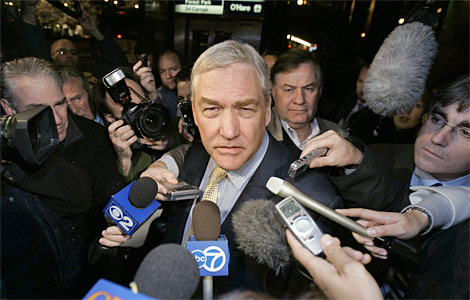
The Goofball of the Month for September 2006 is the traitor Conrad Black. Who, for all of a sudden, wants back into Canada with citzenship.
First of all, he says Canada's a third rate nation.
Secondly, he renounced his Canadian citizenship.
Now he's in trouble with the law, in the United States and looks to get into Canada so he won't have to serve as much time in jail.
Too bad buddy.
You don't shit on our house and tell us it stinks.
Then leave.
Then, come crawling back wanting in because it's too cold outside.
Suck it up Blackie.
You deserve everything you get!
Congratulations Conrad Black, you're the Goofball Of The Month for September 2006.
Thursday, September 21, 2006
Ralphie Resigns
CALGARY—Ralph Klein's long goodbye became official yesterday as Canada's longest-serving current premier resigned as leader of the country's most prosperous province.
Klein told reporters he sent a resignation letter to the executive of the Alberta Progressive Conservatives last week but promised his wife, Colleen, it would not be made public until after a report was released by a crystal meth task force she headed.
The 63-year-old, speaking at a fundraising event, said the day that began the end of nearly 14 years in the premier's chair felt like "any other day" to him.
"It's business as usual, just a nippy September day," he said.
Klein confirmed his plans to stay on until a new leader is chosen by the party, in a race that has been informally in full swing for weeks. The president of Alberta's Progressive Conservatives has confirmed Nov. 25 as the day party members will vote for Klein's replacement.
Doug Graham also says a second ballot, if necessary, will be held a week later on Dec. 2.
Klein, who has said he will also resign as MLA for Calgary-Elbow, said he will watch the race to replace him "with interest" but will not be active in it.
"I'll pay attention to what they have to say, but I'll keep out of the race. I'm not supporting overtly any candidate. I haven't made up my mind who I'll be voting for, but I will be voting."
Some of those who worked with Klein around the cabinet table and are now running to replace him said the day marked the end of an era.
"The absolute fundamental that he taught me was (to) listen," said ex-minister Mark Norris. "Politicians all too often want to talk and tell you what their ideas are, but he was just a master at listening, bringing together consensus and then acting on it."
Ed Stelmach said Klein's early days, when the price of oil was in the tank, the budget deficit was skyrocketing and people were leaving, showed him at his best.
"His leadership was crucial in keeping the team together," said Stelmach. "I remember often sitting at the caucus table and he said, `Look folks, are you behind me or not?' It was the kind of leadership that was necessary."
Jim Dinning, Klein's treasurer in those tumultuous years, recalled his indefatigable energy.
"There was a wonderful excitement around the room, that there was so many things to get done, so many changes to make.
"He just was amazing in his capacity to say, `Now that's a good idea, why don't we run with it?'"
Klein had spoken of leaving office within a couple of years, but accelerated that timetable after he received just 55 per cent support from party delegates in a leadership review in March.
After leaving office, he plans to do some work for two conservative think-tanks, the Fraser Institute and the Manning Centre. He will also be a guest lecturer at the Woodrow Wilson Institute in Washington, D.C.
The year 2006 is definately a "year of change". Alberta is certainly going to be different without Ralph at the helm. It's going to actually be interesting to see how things turn out politically. I wouldn't be suprised if the Liberals make a strong push and a Minority government is formed. Probably a tory, but could be a liberal too. The last election a lot of Albertans gave Ralph the benefit of the doubt. But whoever replaces him won't get such an easy ride.
Sorry to see you go Ralph. You always found a way to make the headlines. Alberta will miss your infamous quotes. We'll always have "shoot, shovel and shut up!"
Klein told reporters he sent a resignation letter to the executive of the Alberta Progressive Conservatives last week but promised his wife, Colleen, it would not be made public until after a report was released by a crystal meth task force she headed.
The 63-year-old, speaking at a fundraising event, said the day that began the end of nearly 14 years in the premier's chair felt like "any other day" to him.
"It's business as usual, just a nippy September day," he said.
Klein confirmed his plans to stay on until a new leader is chosen by the party, in a race that has been informally in full swing for weeks. The president of Alberta's Progressive Conservatives has confirmed Nov. 25 as the day party members will vote for Klein's replacement.
Doug Graham also says a second ballot, if necessary, will be held a week later on Dec. 2.
Klein, who has said he will also resign as MLA for Calgary-Elbow, said he will watch the race to replace him "with interest" but will not be active in it.
"I'll pay attention to what they have to say, but I'll keep out of the race. I'm not supporting overtly any candidate. I haven't made up my mind who I'll be voting for, but I will be voting."
Some of those who worked with Klein around the cabinet table and are now running to replace him said the day marked the end of an era.
"The absolute fundamental that he taught me was (to) listen," said ex-minister Mark Norris. "Politicians all too often want to talk and tell you what their ideas are, but he was just a master at listening, bringing together consensus and then acting on it."
Ed Stelmach said Klein's early days, when the price of oil was in the tank, the budget deficit was skyrocketing and people were leaving, showed him at his best.
"His leadership was crucial in keeping the team together," said Stelmach. "I remember often sitting at the caucus table and he said, `Look folks, are you behind me or not?' It was the kind of leadership that was necessary."
Jim Dinning, Klein's treasurer in those tumultuous years, recalled his indefatigable energy.
"There was a wonderful excitement around the room, that there was so many things to get done, so many changes to make.
"He just was amazing in his capacity to say, `Now that's a good idea, why don't we run with it?'"
Klein had spoken of leaving office within a couple of years, but accelerated that timetable after he received just 55 per cent support from party delegates in a leadership review in March.
After leaving office, he plans to do some work for two conservative think-tanks, the Fraser Institute and the Manning Centre. He will also be a guest lecturer at the Woodrow Wilson Institute in Washington, D.C.
The year 2006 is definately a "year of change". Alberta is certainly going to be different without Ralph at the helm. It's going to actually be interesting to see how things turn out politically. I wouldn't be suprised if the Liberals make a strong push and a Minority government is formed. Probably a tory, but could be a liberal too. The last election a lot of Albertans gave Ralph the benefit of the doubt. But whoever replaces him won't get such an easy ride.
Sorry to see you go Ralph. You always found a way to make the headlines. Alberta will miss your infamous quotes. We'll always have "shoot, shovel and shut up!"
Tuesday, September 12, 2006
Islanders do 'IT' again
 And 'IT' is to sign "unproven" players to very long contracts. crazy!
Rick DiPietro re-signed with the New York Islanders today, agreeing to a record 15-year deal that will pay the No. 1 goalie US$67.5 million. The deal is the longest in NHL history, topping the 10-year, $87.5 million contract the Islanders gave centre Alexei Yashin in 2001.
DiPietro's deal is believed to be second only in length in North American sports to the 25-year pact Magic Johnson signed with the Los Angeles Lakers in 1981. Wayne Gretzky signed a 21-year deal with former Edmonton Oilers owner Peter Pocklington in 1979 but that was a personal services contract not an official NHL contract.
The contract is guaranteed and DiPietro will be paid in full should he retire because of injury. If he ends his career otherwise before the deal expires, he would forfeit the remaining dollars. DiPietro was a restricted free agent this summer and couldn't be unrestricted for another two years. The deal will pay him $4.5 million per season, placing him eighth among goalies.
I'm thinking you could put this one under the 'come back to bite me in the ass' column. Time will tell.
Subscribe to:
Posts (Atom)